ADT
Best starting point for seniors who want an established professional monitoring brand and installer-led setup. Compare contract length, equipment terms and monthly cost carefully.
Traditional home security still makes sense for many older adults: a professionally installed alarm panel, door and window sensors, monitored smoke or panic options, and a familiar keypad can be easier than a camera-heavy app ecosystem.
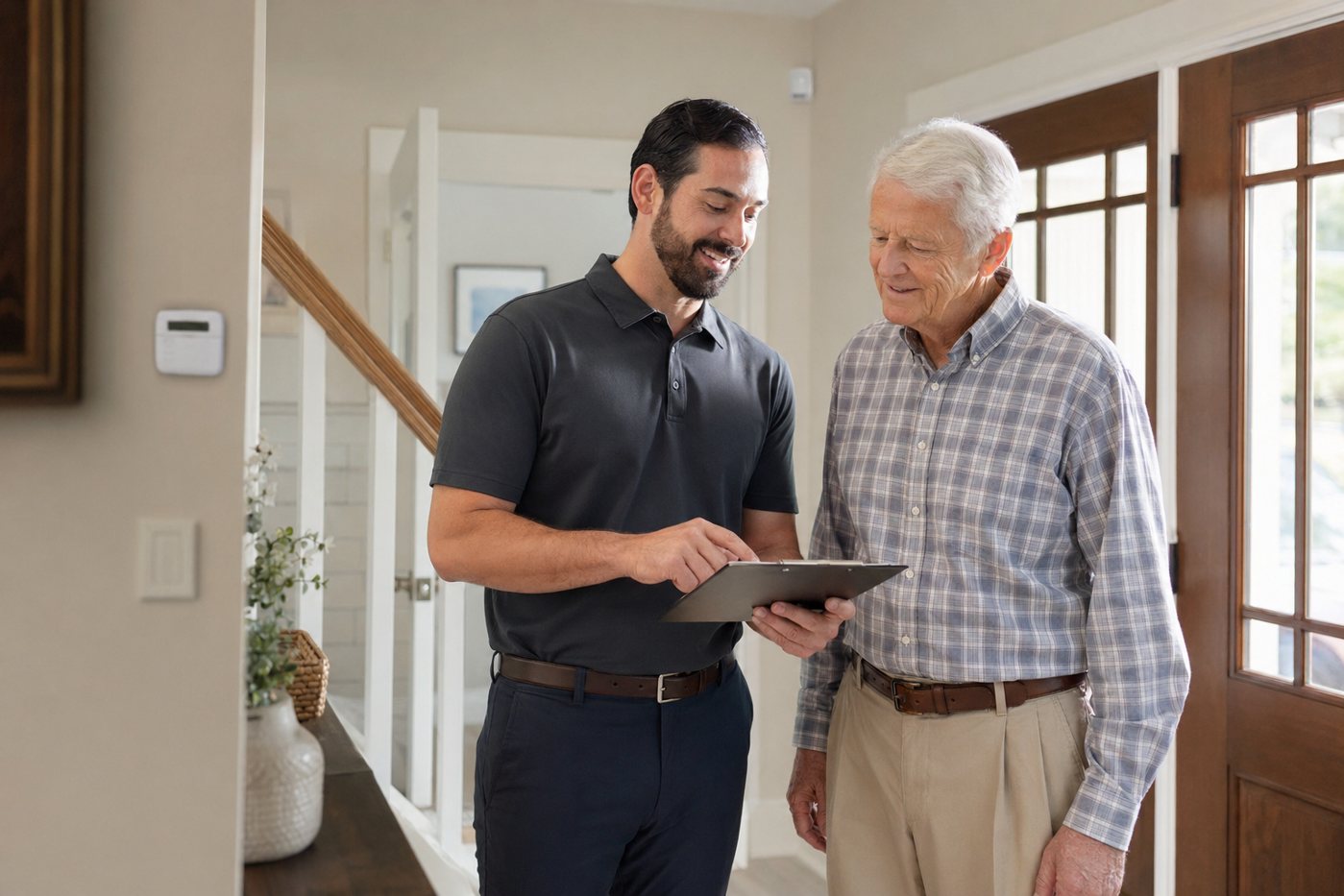
This guide focuses on the kind of monitored alarm system seniors often mean when they ask for “traditional” security: professional setup, clear controls, central monitoring, backup communication and a support process family can understand.
| Situation | Best traditional fit | Why it helps |
|---|---|---|
| Senior wants hands-off setup | Professionally installed monitored system | A technician places sensors, tests signals and explains the keypad instead of leaving setup to the senior. |
| Family wants established monitoring | ADT-style professional monitoring network | Useful when reliability, dispatch process and long-term service matter more than lowest monthly cost. |
| Senior dislikes smartphone apps | Keypad plus optional caregiver app | The senior can arm and disarm at the wall while family receives app visibility in the background. |
| Home has smoke or CO concerns | System with monitored life-safety sensors | Monitored smoke, carbon monoxide and water sensors can add value beyond burglary alerts. |
| Renter or downsizer | Simple monitored DIY with traditional keypad feel | Systems like SimpliSafe or Cove can feel traditional without permanent installation. |
A traditional system does not have to mean old technology. The senior-friendly version is a modern monitored alarm that keeps the parts older adults understand: keypad, entry delay, chime, siren, yard sign, contact sensors and a clear monitoring call process. Cellular communication and caregiver apps can sit behind that familiar interface.
The mistake is buying a system only because it looks traditional. Ask how it communicates during an outage, how false alarms are cancelled, who can manage codes, whether equipment is owned or financed, and what happens if the senior moves.
Traditional monitored alarms are strongest when the senior wants a system that feels like part of the home, not another device to manage. A wall keypad by the entry door, door chimes, a predictable siren and professional monitoring can be more comfortable than asking the senior to open an app every time they leave.
They also suit households where adult children live elsewhere. Caregivers can receive low-battery notices, alarm history or arming status while the senior keeps using the keypad. That split is often the best compromise: simple controls for the person at home, remote visibility for trusted helpers.
Best starting point for seniors who want an established professional monitoring brand and installer-led setup. Compare contract length, equipment terms and monthly cost carefully.
Best premium traditional-plus-smart-home route when professional installation, cameras and automation should be configured together.
Best traditional-feeling no-contract alternative for many seniors who want a keypad, base station and optional monitoring without a heavy install.
Best simple monitored DIY system for households that want emergency response focus without a complicated smart-home stack.
| Before the installer leaves | Why it matters |
|---|---|
| Test every exterior door and key window | Confirms the system covers the real entry points the senior uses. |
| Practice arm, stay, away and disarm | Reduces false alarms and makes the routine less intimidating. |
| Set unique user codes | Family, caregivers and cleaners should not all share the same code. |
| Confirm emergency contacts | The monitoring center should call the right people in the right order. |
| Write down battery and support steps | Low-battery beeps are a common frustration for older adults. |
For most seniors asking for traditional home security, start by comparing ADT for full professional monitoring, then SimpliSafe or Cove if contract flexibility and simpler equipment matter more.
Yes, especially when a senior wants professional installation, familiar keypad controls, monitored burglary and fire alerts, and less app-based setup.
Many modern monitored systems use cellular backup or broadband instead of relying only on a landline. Confirm the communication path and backup power before buying.
Often yes. Shared access can help family see alarm history, low batteries and arming status, while the senior keeps using the simpler keypad.