Best Home Security Systems for Seniors
Compare systems with entry sensors, motion sensors, monitoring, app controls, and caregiver-friendly workflows.
Motion sensors can protect a senior home when they are placed thoughtfully. The wrong setup creates false alarms, nighttime stress, and confusing alerts; the right setup quietly covers the paths that matter.
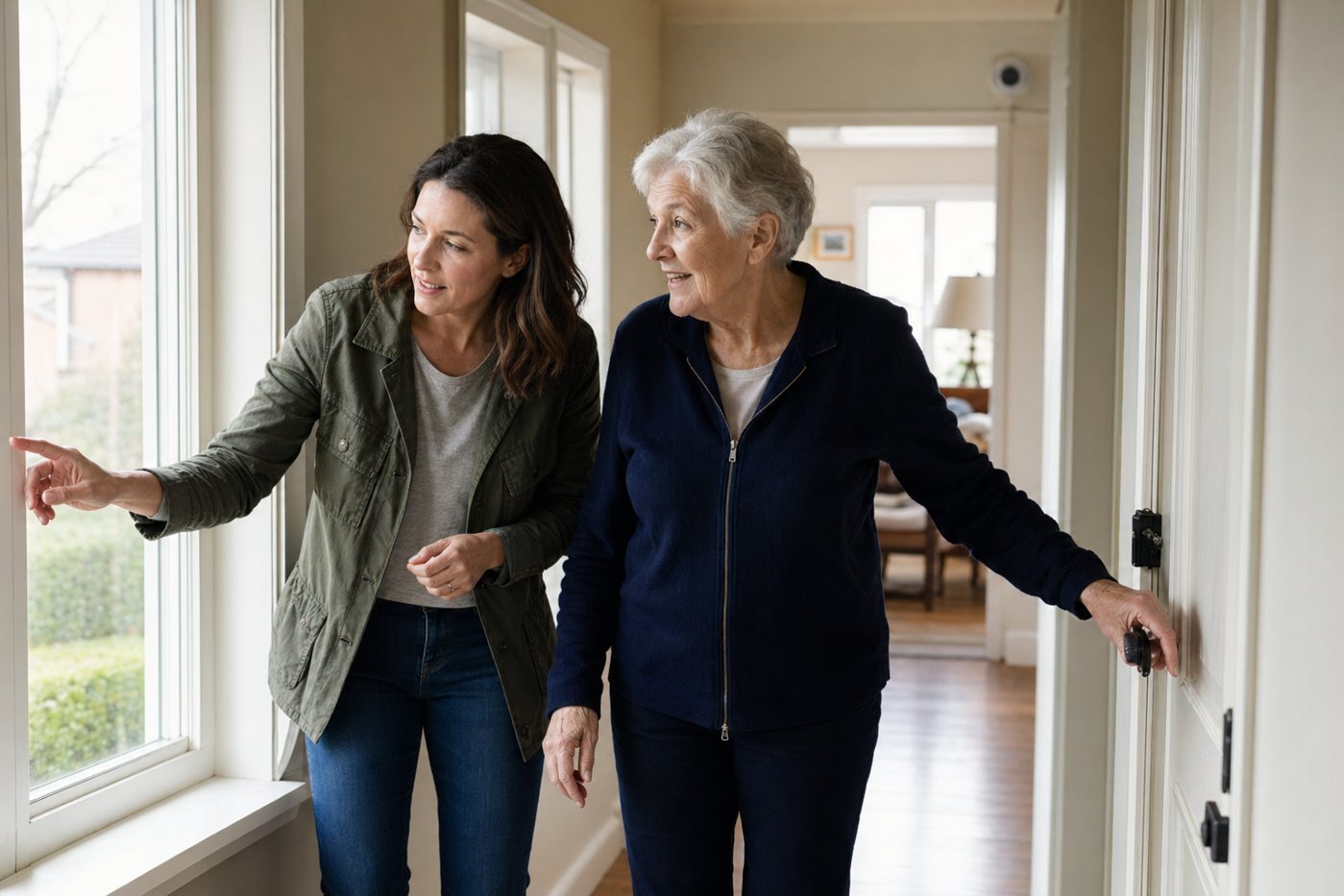
This guide explains how older adults and caregivers should think about motion sensors in home security systems: what they detect, where to place them, how to reduce false alarms, and how they fit alongside contact sensors, cameras, lighting, medical alerts, and professional monitoring.
Compare systems with entry sensors, motion sensors, monitoring, app controls, and caregiver-friendly workflows.
A room-by-room planning guide for safer entrances, hallway coverage, cameras, locks, and emergency routines.
How to combine sensors, alarms, cameras, lighting, and trusted contacts for older adults living independently.
Useful comparison if you are choosing between DIY ecosystems with different sensor, camera, and monitoring trade-offs.
| Location | Why it matters | Setup caution |
|---|---|---|
| Hallway near bedrooms | Covers movement after an intruder enters while avoiding cameras in private rooms. | Use night or home modes carefully so normal bathroom trips do not trigger alarms. |
| Living room or main corridor | Protects the central path most visitors or intruders would cross. | Avoid heating vents, sunny windows, and moving curtains. |
| Garage entry | Useful where garage-to-house doors and storage areas are common access points. | Check temperature range and avoid aiming at vehicles that retain heat. |
| Basement or side entry | Covers lower-traffic areas that may be missed by door sensors alone. | Label the zone clearly so caregivers know what triggered. |
Use contact sensors on doors and windows, then add a few motion sensors on likely interior paths rather than filling every room with alerts.
No. They do different jobs. Door and window sensors detect entry attempts at the perimeter; motion sensors detect movement inside an area after entry or in selected interior zones.
They can provide useful security context, especially for entry paths, garages, and hallways. They should not be treated as proof of wellbeing or fall detection unless the device is specifically built for that purpose.
Only if the system is configured around normal nighttime movement. Many households use perimeter sensors overnight and leave interior motion sensors off or limited to areas the senior will not enter.