Place signs at decision points
A sign should appear before a visitor opens a gate, steps onto a porch, rings a bell or walks down a side path.
Security signs, yard stakes and window decals can help set boundaries around a senior's home, but they work best as a visible reminder that stronger protections are already in place: good locks, lighting, cameras, monitoring and a clear caregiver response plan.
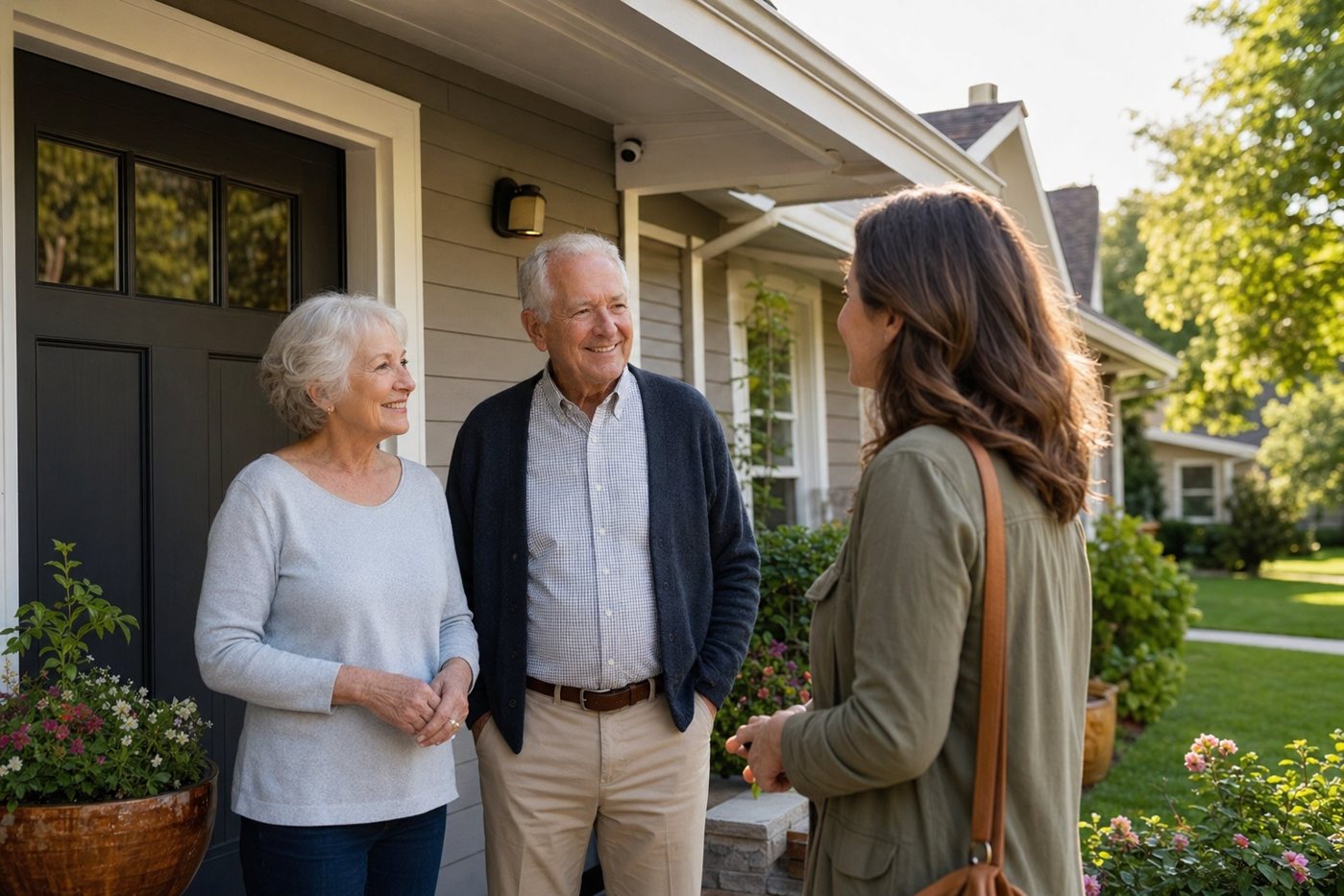
This archive page turns old product-category traffic for security signs into a practical buying and placement guide. If you are helping an older adult, treat signs as the lowest-cost layer—not the layer you rely on in an emergency.
A clear sign can discourage casual trespassing, guide delivery drivers, and make a porch or side gate feel less anonymous. It cannot verify visitors, record evidence, call a monitoring center, or protect someone who opens the door to the wrong person.
| Sign type | Best senior use case | What to check |
|---|---|---|
| Alarm yard sign | Shows that the house may have monitoring, sensors or sirens. | Use only if the system is active; place where it is visible without blocking mowing or walking paths. |
| Window security decal | Good for front windows, side entries and back doors that may not have room for a stake. | Choose decals that are readable from outside but do not cover the senior's view. |
| No soliciting sign | Reduces unwanted door knocking and pressure sales conversations. | Put it near the doorbell or knocker, not hidden on a side wall. |
| Private property or gate sign | Clarifies boundaries around side yards, back gates and detached garages. | Use rounded, weatherproof materials and avoid mounting hardware that can snag clothing. |
| Camera notice | Pairs well with a doorbell camera, driveway camera or porch camera. | Keep the camera maintained; a sign without a working device is only a bluff. |
| Dog warning sign | Useful when there is a real dog or a need to warn delivery drivers before they open a gate. | Avoid exaggerated wording that could create insurance or neighbor concerns. |
A sign should appear before a visitor opens a gate, steps onto a porch, rings a bell or walks down a side path.
Do not use low stakes, dangling chains or signs that narrow a walkway. Fall prevention matters more than deterrence.
If a delivery driver or neighbor cannot read the sign from a normal approach distance, it will not change behavior.
Caregivers should mount signs at safe reachable heights. If a sign needs a ladder to clean or reattach, choose a different spot.
Signs are passive deterrents. They are inexpensive and easy to install, but they do not replace the senior-friendly basics that actually reduce risk.
Audit locks, lights, codes, emergency contacts and daily routines before adding more products.
Use cameras around entrances with clear consent, simple alerts and respectful privacy boundaries.
Compare monitored systems when professional installation, a keypad and emergency response are priorities.
A deeper look at dog-related warning signs, placement and why they should not replace real protection.
Choose between alarms, cameras, doorbells, sensors and smart locks with a senior-first lens.
Build a simpler, safer home around entrances, lighting, routines and caregiver visibility.
They may deter some casual trespassers, but signs are not reliable by themselves. Locks, lighting, cameras, monitored alarms and good routines provide stronger protection.
It is better to be accurate. A generic “no soliciting,” “private property” or “security cameras in use” sign is usually clearer and avoids implying protection that does not exist.
Put it where a visitor makes a decision: by the gate, front walk, porch, doorbell, side path or driveway entry. It should be easy to read and should not create a trip hazard.
Check working locks, exterior lighting, house numbers, safe paths, emergency contacts, camera settings and whether the senior has a simple way to screen visitors.